
Texas: Bigger Is Better As Children’s Population Booms
This story was produced in collaboration with
In Texas, everything is bigger, including the children’s hospitals.
Driven by a sharp increase in demand, a surplus of cash and their own outsized ambitions, children鈥檚 hospitals in Texas are expanding furiously, investing billions in new facilities and services and reshaping the geography of children鈥檚 care in the state.
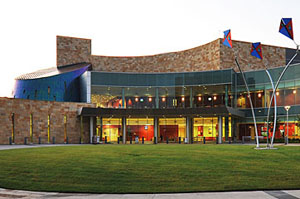
Children鈥檚 Medical Center in Plano
The 487-bed Children鈥檚 Medical Center in Dallas opened a second pediatric hospital in Plano in 2008, part of an ambitious plan to expand operations in the growing, well-to-do suburbs north of the city. Children鈥檚 Medical Center Legacy, a 72-bed facility with an ICU, MRI and ambulatory care, is located on the site of a former family farm and, with 155 acres, has plenty of room to grow.
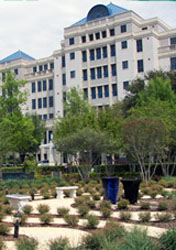
Cook’s Children’s Medical Center
Cook Children鈥檚 Medical Center in nearby Fort Worth is also adding beds and services as part of a $250 million expansion. Started as the Fort Worth Free Baby Hospital in 1918, Cook expects to position itself among the nation鈥檚 largest children鈥檚 medical centers, with 428 licensed beds, when its expansion is completed early next year.
Texas Children鈥檚 Hospital in Houston already ranks as one of the nation鈥檚 largest children鈥檚 facilities. With 639 beds, almost 7,000 employees and a 20-story hospital, it is a key destination in the city鈥檚 sprawling downtown medical complex, which includes other hospitals and research facilities. And with plenty of money available, it is looking to get even bigger.
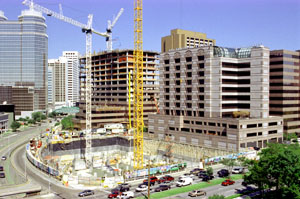
Texas Children’s Hospital during a 1999 expansion
In 2006, Texas Children鈥檚 announced a $1.5 billion campaign, Vision 2010: Excellence to Eminence, with a stated goal of enhancing the health and well being of children worldwide. Officials said then their planned expansion would be the largest ever by a single children鈥檚 hospital. It includes a new maternity center and a second, 96-bed children鈥檚 hospital west of Houston near affluent suburbs.
“Texas is different,” said Bryan Sperry, president of the Texas Children鈥檚 Hospital Association. “The hospitals are struggling to keep up with the population growth. We鈥檙e heading toward 7 million kids.”
With millions in profits and ample investments, the hospitals appear positioned to handle the growth spurt, financial records show. Cook Children鈥檚 reported nearly $100 million in profits on its 2009 tax return, the most recent publicly available. Texas Children鈥檚 had $1.9 billion in stocks and other investments as of 2010.
Children鈥檚 Medical Center in Dallas measures its imprint another way. It recently hired researchers at the University of North Texas to study the hospital鈥檚 economic impact. The researchers听 that it generates $1.6 billion in yearly economic activity, including millions for goods and services, ongoing construction and salaries. “There is no question it is one of the regional economic drivers,” said economist Terry Clower, one of the study鈥檚 authors. “Even during the downturn, [Dallas] Children’s was continuing with their capital expenditures.” The hospital paid the university about $17,000 for the report, Clower said.
Like the Dallas hospital, Cook Children鈥檚 has also followed its population as it moves northward. It competes with Dallas Children鈥檚 for patients in Plano, Southlake and Grapevine, among other growing communities. Cook鈥檚 $250 million expansion, the largest in the hospital鈥檚 history, includes a larger neonatal intensive care unit, expanded emergency room and an outpatient surgery center.

Day Two听
One City, Three Hospitals
Regional Reports听
Arizona
Chicago
Denver
Ohio
Pittsburgh
Texas
Day One听
The Rise of Children’s Hospitals
“Some may ask, ‘how can we begin this project while our country is in an economic challenge,'” Cook Children鈥檚 CEO, Rick Merrill, asked in May 2009 as the expansion was starting. He then answered his own question. “I think anyone who walks through our halls knows we are bursting at the seams. 鈥� We have to take action.”
In Houston, Texas Children鈥檚 officials are pushing their services out to the so-called Energy Corridor along I-10, one of the fastest-growing areas in the state.
In 2007, it took over the maternity service of another hospital. Since then, it has acquired some of the largest and busiest OB-GYN practices in the region. To house the new business, Texas Children鈥檚 is building a $575 million maternity hospital in a former hotel. When The Pavilion for Women opens later this year, officials predict, they will handle more than 1,500 deliveries annually.
Delivering babies is a natural extension of its mission, Texas Children officials have said. It will also help to secure a steady flow of pediatric patients requiring everything from primary care to complex surgical procedures.
“It’s cradle to grave care,” said Jerry Katz, a health care consultant and former children鈥檚 hospital CEO. “A number of elite children鈥檚 hospitals are doing this. It鈥檚 very smart of them; they鈥檙e locking up their book of business.”


